

Words: Annie Vernon
“I felt that I stood equal with boys/men and could achieve what I wanted to achieve if I worked hard enough.”
As The Women’s Boat Race prepares to celebrate its centenary in 2027, alumna Celia Duff reflects on a pioneering chapter in its history, the satisfaction of winning for both universities, and why, at nearly 73, she is still chasing world records.
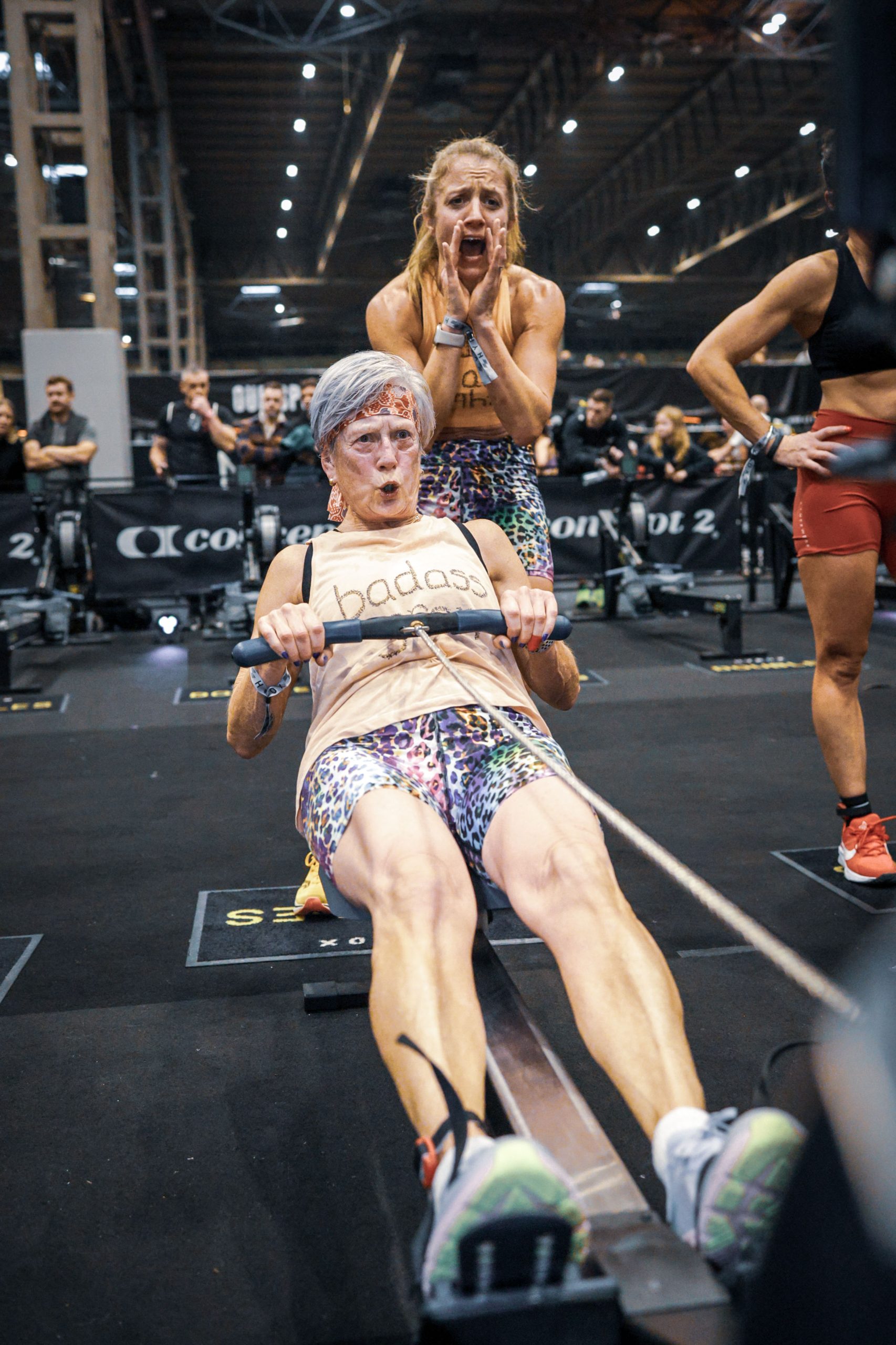
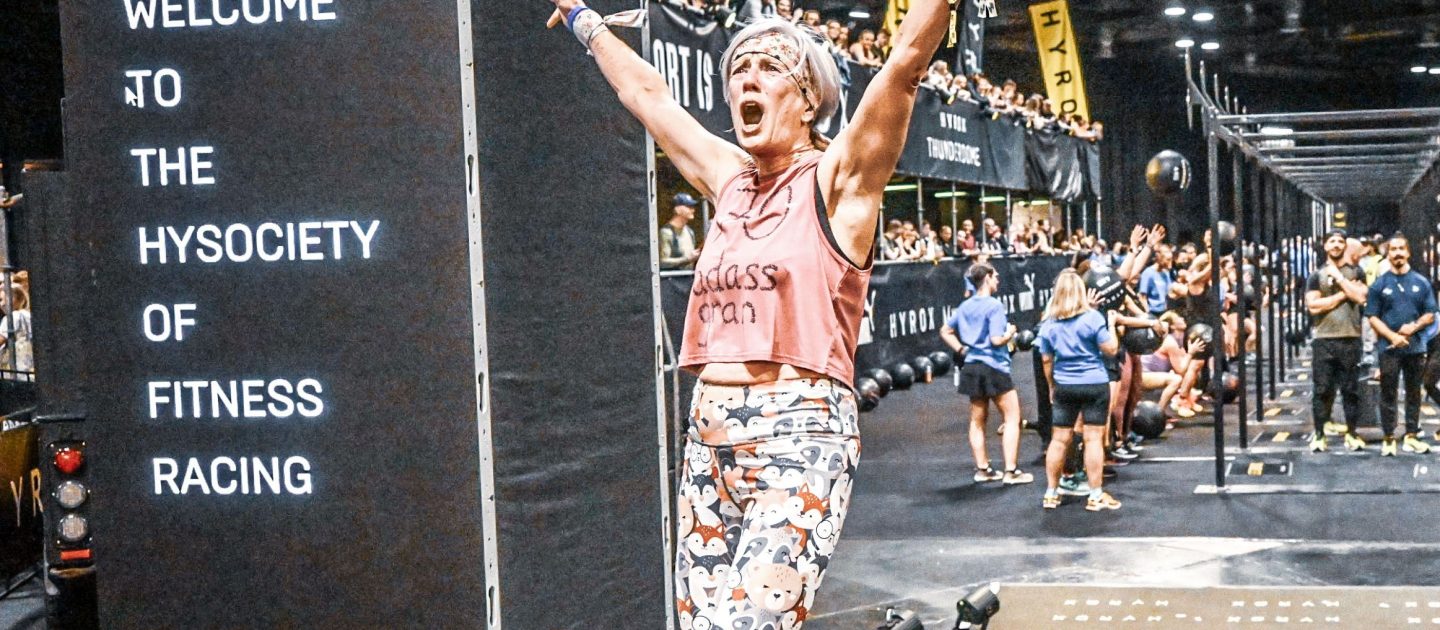
Celia Duff has never been particularly interested in standing still. In the 1970s, she was among the women breaking new ground at Cambridge, before crossing the divide for clinical studies and to row for Oxford. Today, approaching her 73rd birthday, she is a world champion in HYROX, the fitness racing phenomenon that combines running with strength and endurance challenges.
For Duff, the thread connecting these very different chapters of her life is not a desire to make history, but a simple belief in what women can achieve.
“Girls can do anything,” she says. “I grew up feeling I can do, I can stand alone, I can achieve, I have support.”
It is an outlook that took her from the first cohort of women admitted to Clare College, Cambridge, in 1972, to an unusual place in the history of The Boat Race: she believes she was the first person to wear both shades of Blue.
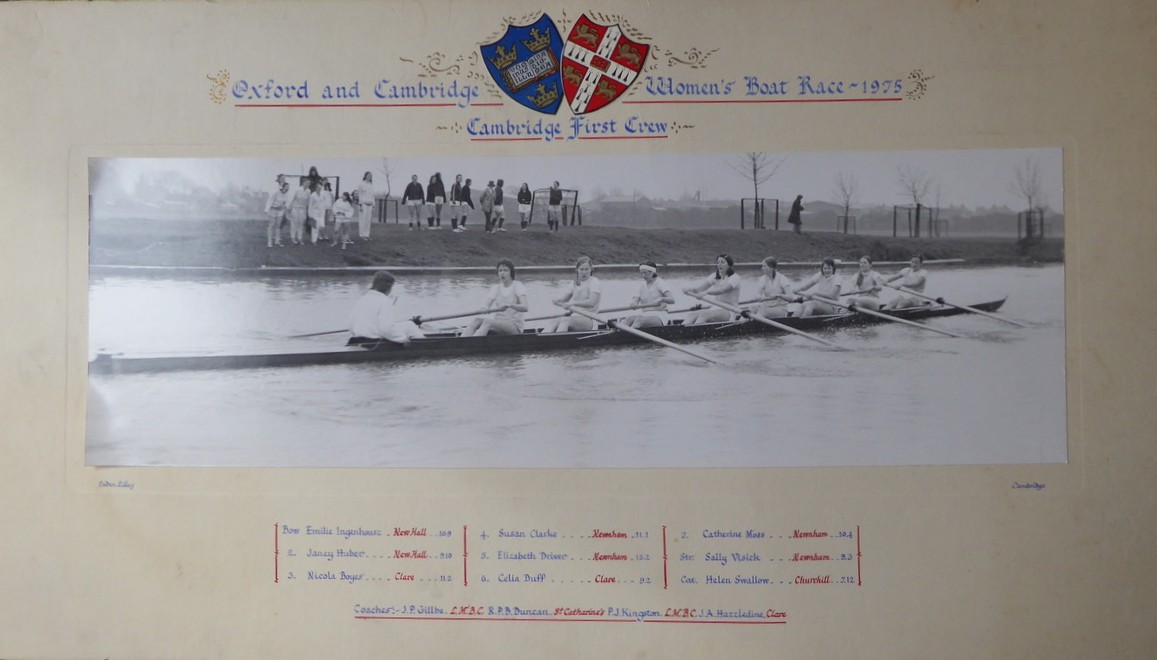
“I believe I was the first person, male or female, to do this,” she says. “I rowed at Blue Boat level for both Oxford and Cambridge, twice for Cambridge, once for Oxford. A man did it 10 years later.”*
Her achievement went largely unnoticed at the time. When newspapers celebrated the first man to row for both universities a decade later, Duff wrote to the Daily Telegraph to point out that she had got there first. Her letter received a small mention, but little more. “It was a sign of the times.”
For her, the more significant story is how far women’s sport has travelled since those early days. “Nobody would now turn a hair,” she says of the greater equality of women’s and men’s sport. “My feeling is that is much more important than anything I may have done back in the mid-70s.
“Would my 1970s self believe possible the development of women’s rowing? The simple answer is absolutely. From mid teenage I never felt that being a girl was, nor should be, a hindrance. I challenged the notion at its core. I felt that I stood equal with boys/men and could achieve what I wanted to achieve if I worked hard enough. When we started rowing at Clare I just wanted to join in and learn this new sport. I never understood nor accepted that women were less in any way. My time at school and then Clare and into Medicine was all part of that journey.”
A pioneering generation
Duff arrived at Cambridge in 1972 to study medicine, joining Clare College in the first cohort of women admitted to what had previously been an all-male college. Having attended Marlborough College which was the first boys’ public school to admit girls, she was accustomed to being part of a changing landscape.
“Moving to a male college seemed like a natural step for me,” she recalls. “I was always a bit… prepared to take risks, maybe.”
She remembers arriving with confidence and a willingness to stand her ground. While she is careful not to suggest that every woman’s experience was the same, she found Clare welcoming.
“The staff, the Fellows, were all very prepared and very welcoming,” she says. “We were a bit of a curiosity, inevitably, to start with, and everybody wanting to make friends. But after that, after the first year, it just became completely normal.”
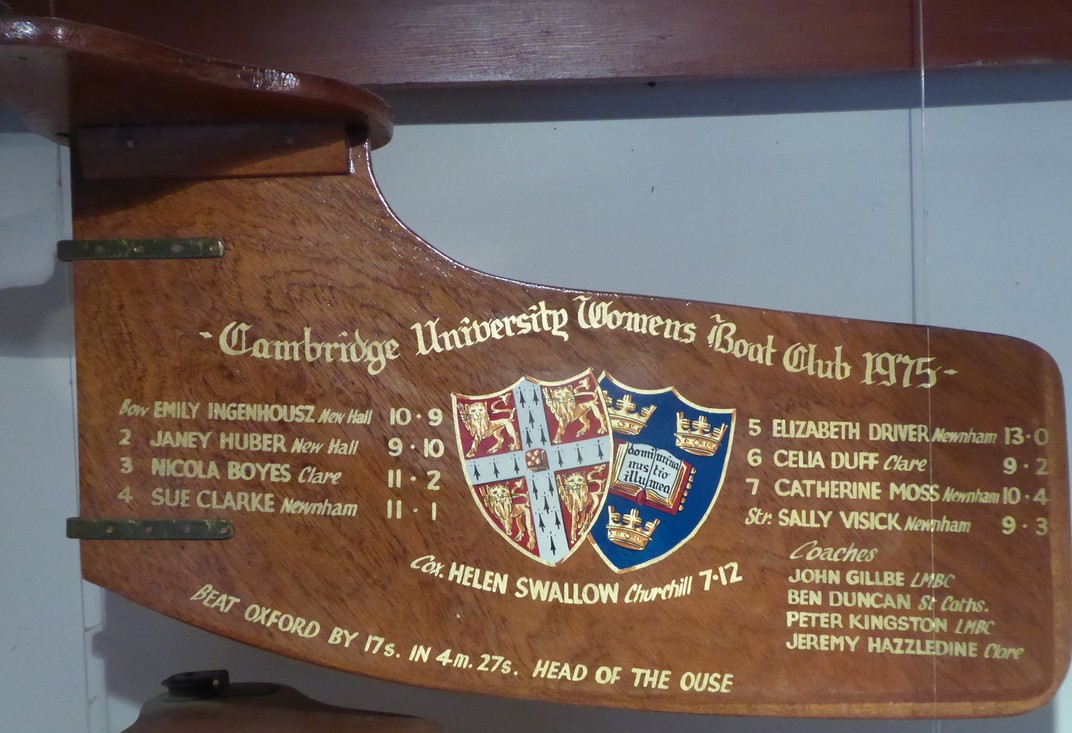
Duff represented Cambridge in 1974 and 1975, winning both races, before moving to Oxford for her clinical training and joining its crew in 1976. She won again.
That made her a member of three winning crews, although she is quick to resist any suggestion that her move to Oxford was the decisive factor in its victory.
The secret weapon
When Duff arrived at Oxford, Cambridge had won 12 consecutive women’s Boat Races, including the two in which she had competed. Her new teammates, she discovered, had a particular view of their incoming recruit.
“I remember when I rocked up to OUWBC, they felt that I was their secret weapon,” she says. “They told me that, actually, towards the end of the season.”
The thinking was understandable. Duff had rowed in Cambridge’s winning crews, and Oxford’s women hoped that bringing across someone with that experience might help them end the run of defeats.
“And indeed, Oxford won,” she says, before immediately adding: “Nothing to do with me. Nothing, nothing to do with me.”
She allows that her arrival may have helped boost confidence, or encouraged the crew to train harder. The Oxford team had several experienced rowers who were tired of losing and determined to change the pattern.
“I really think that the Oxford crew had fire in its belly that year,” she says. “They were fed up with being beaten and had convinced themselves that somebody coming over from Cambridge would make a difference.”
Perhaps, she suggests, that belief helped translate into a performance. But: “As far as I was concerned, I was just a member of a crew and we were doing our best.”
The victory was a close one, and Duff remembers the determination she felt on the day: “I’m not going to be beaten by Cambridge. I’m not going to be in a boat that doesn’t win.”
The long road to equality
Duff stopped rowing after 1976 and took up coxing, later building a career in public health medicine and medical education. She worked across different levels of the NHS, including regional and national roles, and volunteered during the COVID-19 pandemic vaccination rollout after retiring.
She has watched the development of The Women’s Boat Race with satisfaction, from the move to an annual fixture in Henley on Thames in 1977 to the landmark decision to bring the women’s and men’s races together on the Championship Course on the Tideway in 2015.
Her reaction to that latter milestone was not one of astonishment, but of recognition that it was the right thing to do.
“It’s taken a long time to get there,” she says. “I just feel really strongly that women can do. Yes, we don’t have the testosterone, so we’re not as muscularly strong, but actually our endurance is possibly better. And there should be equality.”
A new sporting chapter at 70
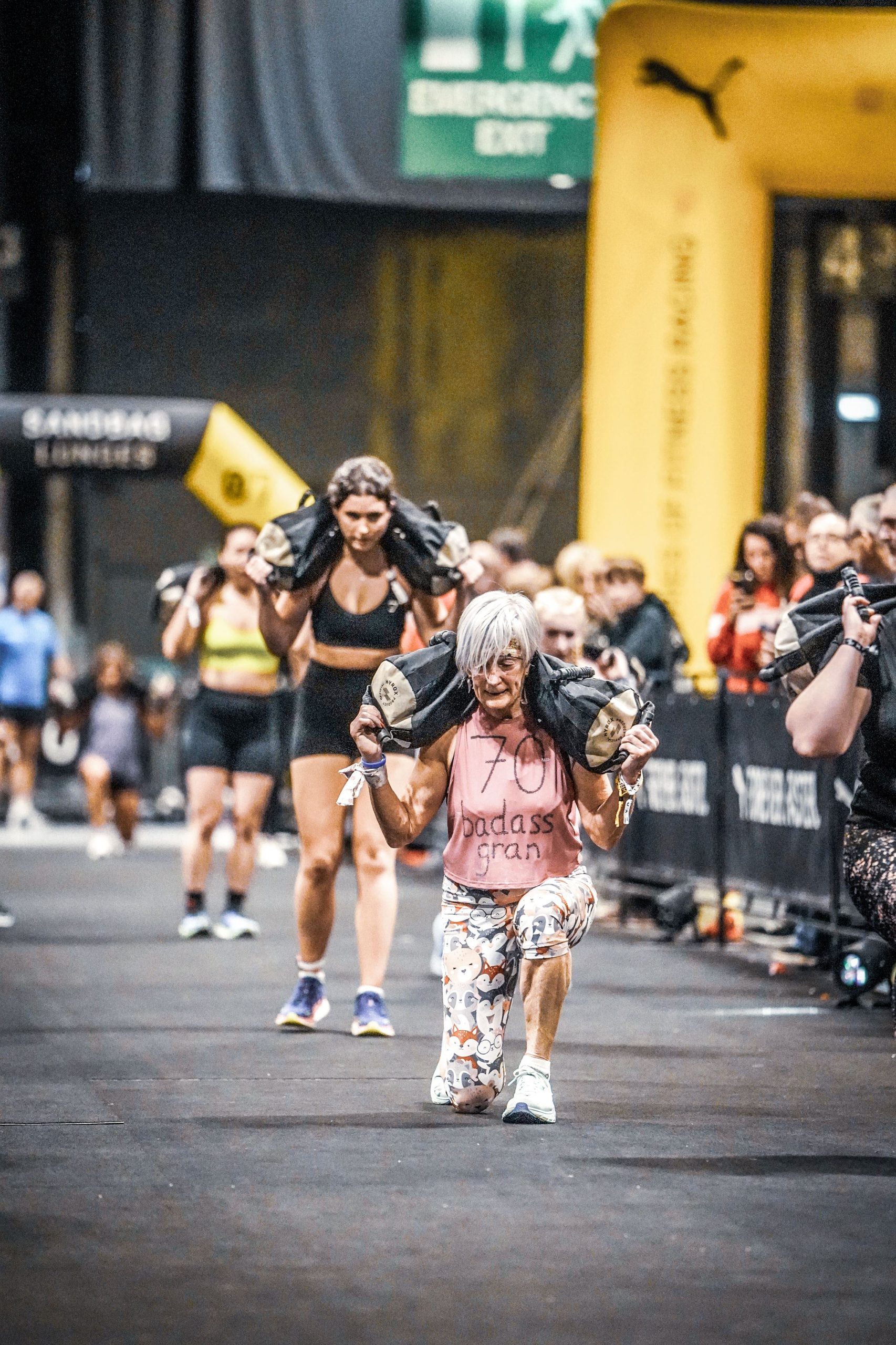
Duff’s latest sporting adventure began almost by accident. After her daughter and son-in-law became early adopters of HYROX, she was encouraged to enter a competition herself. She had started running again during lockdown in 2020 and was looking for a new challenge.
“I live on my own and had realised that lockdown could be a period of immense loneliness and unhealthy introspection. So I started running with my dog, to be outside and as a challenge. I started to get really fit again.”
She bought a ticket, looked into the demands of the event and realised that a little more preparation would be required.
“I realised this was really quite hard. This isn’t just going for a run with the dog or going to the gym and doing a few press-ups and a few squats. I needed to properly train.”
At her first competition in October 2022, she broke the world record for her age group and earned an invitation to the World Championships. She went on to become a two-time solo world champion. In 2024, having turned 70, she broke the over-70 world record again, this time by seconds. Her achievement was short-lived: a Danish woman broke her record just three weeks later. That woman, Kirsten, is now her doubles partner.
“If you can’t beat them, join them!” Duff says, explaining how she spent around a year persuading her former rival to compete alongside her. The pair went on to win the World Championships and set a new age group world record in Stockholm in June 2026.
Duff describes the experience as “huge fun”, and she is already looking ahead to their next races. She is determined to improve their time and retain their record, although she jokes that much of the improvement may need to come from her running.
HYROX combines eight kilometres of running with eight demanding workout stations, including rowing, sled pushes and pulls, burpee broad jumps, weighted lunges and wall balls. It is a formidable test of cardiovascular fitness, strength and endurance — qualities familiar to anyone who has rowed competitively.
Yet Duff insists that her ambitions are not really about records or medals.
“I honestly do not believe that I am anything special,” she says. “For me, the most important thing is longevity. I am quite good at it. I’m far from the best, but I’m quite good at it and I want to go on enjoying it.
“You find your tribe, don’t you? You find something you enjoy, and then you just get hooked in.” For Duff, that tribe now includes a Danish doubles partner, fellow competitors and a gym full of younger people, among whom she is usually the oldest person in class.
And what next? “I will continue to compete as long as my joints allow. I have several women’s doubles races lined up. We are at the higher end of our age group range and there will be younger pairs coming through. World records are meant to be broken. Ours will be broken but I would like us to do it before anyone else does and then another pair will be cheered on by me.”
As The Women’s Boat Race prepares to celebrate 100 years since its first contest, Duff’s story offers a powerful perspective on the progress made — and the spirit that helped drive it. In the 1970s, she helped normalise the idea that women could compete at the highest level, even when the support and recognition lagged behind. Today, she is still testing her limits, not because she needs to prove anything, but because she can.
And that, perhaps, is the most fitting legacy of a pioneering generation: a belief that the next challenge is always worth taking on.
*Bruce Philp, who died in 2022, rowed for Cambridge in 1982 and 1983, Goldie in 1984; then switched sides to complete his medical training at Oxford. He rowed for Oxford in 1985 and 1986, the latter as President. He was later one of the UK’s foremost plastic surgeons, specialising in burns and trauma reconstruction.